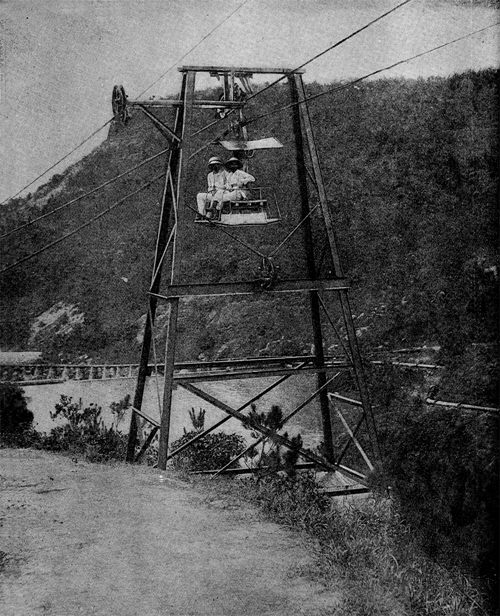
The "aerial tramway", completed in 1892, enabled staff to commute conveniently between this seasonal home and the refinery below. At roughly a mile and a half in length, it consisted of two fixed steel cables supported on pylons, carrying two six-person cars. Propulsion was provided by a steam-powered winch located at the lower terminal and the tramway worked on a counterweight system, with the winch pulling one car down and using its weight to pull the other car up.
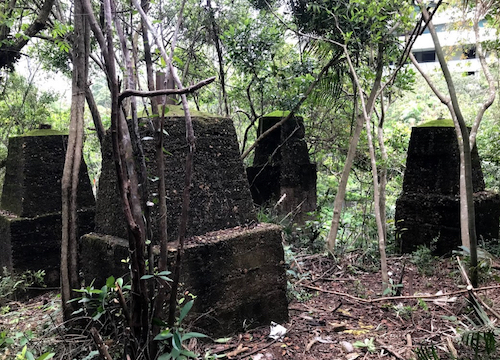
By the 1930s, with plague eradicated in Hong Kong and innovations such as electric ceiling fans making summertime at sea level more bearable, the Sanitarium had become an expensive luxury. After an unsuccessful attempt to sell, the company tore down the buildings and the cable car system in 1932. Traces of its whereabouts can still be found however, and Swire's Archive Service has recently joined forces with a local heritage group to produce a hikers' guide to the area, which is now part of Tai Tam Country Park. The group has located the foundations of 24 of the pylons used to support the cable system – and believes one is yet to be found. They have also mapped an old trail that follows the cable car route, and have identified the foundations of the Sanitarium, as well as an old rifle range used by staff for target practice. These remnants can all be located with the aid of a new leaflet produced by the Archive Service with funding from the Swire Trust. Please click
here to obtain an electronic copy of the leaflet. To obtain a printed copy, you can contact the Swire HK Archive Service
archiveservice@jsshk.com with your mailing information.