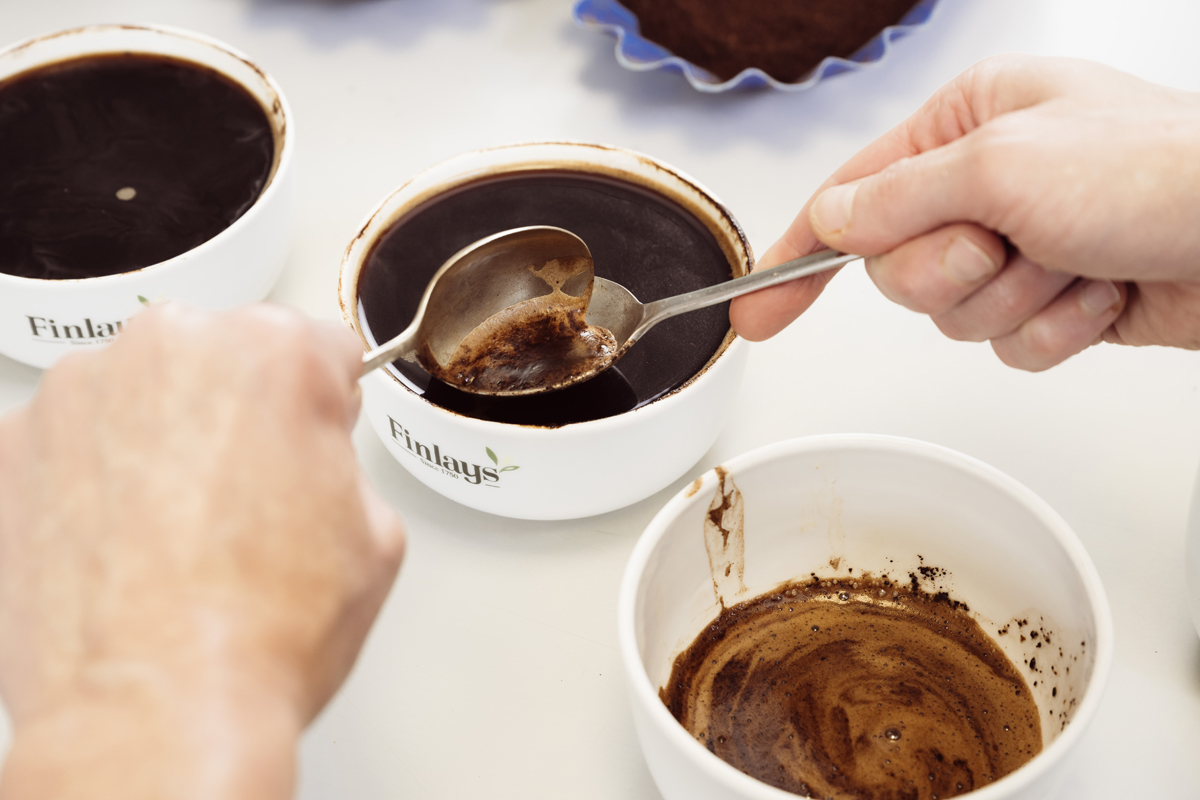
Finlays has been a key player in the global tea trade for over two centuries and has been prominent within the coffee industry for more than a hundred years. As such, the chances are you have tried some of Finlays' products in a delicious hot or cold beverage. Here, we take a look at how the company is catering to changing tastes through product development; and explore how Finlays will achieve its ambition of growing its market share in North America.
Over the past few years, Finlays has undergone a significant rebalancing of its business operations, and is now prioritising its extracts portfolio to drive expansion, while maintaining steady growth in its coffee and leaf tea businesses. The company remains geographically diverse, with activities spanning five continents.
Two of the most dynamic markets are North America, served by Finlays Americas, headquartered in Lincoln, Rhode Island, and the Chinese Mainland, serviced through a joint venture with Damin Food (Zhangzhou) Co., Ltd ("Damin"), which is based in Shanghai. Elsewhere, the company has operations in the United Kingdom, Europe, Kenya and Sri Lanka. In addition to its partnership with Damin, Finlays also has an extracts commercial team operating in Asia. And while Finlays is no longer a tea grower of scale, the company retains a tea farming business in Argentina, which serves its North American markets by growing leaf tea primarily for use in tea extracts.
Across its operations, Finlays exclusively serves business-to-business ("B2B") customers through three channels: beverage brand owners, including several well-known household names; retail, such as supermarkets; and food and beverage outlet chains — many of which have a global presence. The company's portfolio of products and solutions includes coffee extracts, tea extracts and botanical extracts, as well as leaf tea and roast and ground coffee. The common thread is natural beverages that supply consumers with energy, and cater to wellness and other health trends that are emerging across the world.
Customer centric
So, what was it that prompted the pivot from being best-known as a tea grower, to focusing its efforts on becoming an extracts solutions provider? For James Woodrow, Finlays Group Managing Director, it all boils down to creating "stickier" relationships with customers.
Says James: "If you go back five years, we were primarily known as an agricultural producer focusing on tea, but now the onus is on being an extracts, ingredients and solutions provider to beverage companies – which includes managing their supply chains. This creates closer customer relationships which, in turn, helps us grow profitably alongside our customers. That's why we are moving the heart of the business towards being a one-stop-shop for extracts."
But what does this look and, more importantly, taste like? James says it is all about providing flavour solutions to customers. If a consumer goes into a large, well-known coffee chain or fast-food franchise, they expect the beverages on offer to change on a regular basis. This might include seasonal flavours, such as during Christmas or other festive periods, or the highly popular options found on the Chinese Mainland, such as a blend of coffee and tea, or coffee infused with the essence of baijiu, a popular Chinese spirit.
"This rejuvenation process occurs in food services businesses, but also on your supermarket shelf," says James. "A prime example of this is cold brew coffee, which has grown significantly in market share recently. Supermarkets even have their own private labels now, as more consumers discover and, in many cases prefer, the smoother taste of cold brew coffee." This trend has been growing in both the Chinese Mainland and North American markets over the past decade or so, and Finlays has built a cold brew facility in Hull, UK, to introduce the pleasures of the beverage to markets in Europe.
In the drive to become a one-stop-shop for customers, Finlays now offers a range of value-adding solutions and enhancements: the extracts can come in different formats, such as liquid or powdered form; and they come in different formulations — for example, with added flavours or dairy extracts; plus, a range of packaging is offered to suit different applications. James explains: "Take a fast-food restaurant as an example. First, we extract the coffee, then we concentrate it into a liquid, which makes it easier and cheaper for the customer to transport. And finally, we can offer them the extract in pouches or boxes, depending on what their operations require."
R&D fuelling growth
At the heart of Finlays' customer-centric approach is a relentless focus on research and development ("R&D"), particularly at Damin on the Chinese Mainland, where innovative flavours are created for customers on a truly staggering scale. The history of tea stretches back thousands of years, so it's no surprise that Finlays, alongside joint-venture partner Damin, pours huge resources into developing new tea flavours for the Chinese Mainland market. The pace of change is very rapid. In the space of just 18 months, one food service customer doubled in size, going from 10,000 to 20,000 stores across the country. And for Finlays to be successful, Damin and Finlays must evolve just as quickly.
"Menus can change literally every month," says James, "so Damin's R&D teams work tirelessly to develop new products to entice consumers. Damin can go very quickly from agreeing a sample with the customer to producing the finished product, which is then shipped out to 20,000 stores across the Chinese Mainland. The fast-paced nature of the market makes our job hugely exciting."
Opportunities in North America
In North America, the company developed its capabilities by acquiring Autocrat, a coffee extracts supplier, in 2014; and then in 2019, Aspen, which gave Finlays the technology to enter the cold brew coffee market.
Tastes here are somewhat different to other parts of the world, such as the Chinese Mainland and even Europe. For example, while Chinese Mainland has endless varieties of teas available for consumers, the style of tea consumed in North America tends to be sweet and served over ice. That isn't to say that there are no similarities. Cold brew coffee has found favour in both markets; likewise, a recent trend for green coffee, which eschews the roasting process but provides the same caffeine hit, without what some describe as bitterness.
As such, North America presents an incredibly dynamic marketplace for Finlays. The region's long history of immigration has produced a melting pot of ethnicities and cultures, resulting in a wide variety of beverage preferences.
Charley Snell, Chief Executive Officer, Finlays Americas, explains what's driving the market: "It's the ongoing shift from hot to cold, highlighted by cold brew coffee, as well as the frequency and different offerings of beverages. We're seeing that, more and more, people want healthier sources of energy, and that's where natural caffeine comes in – both with coffee and tea extracts. Another driver is the endless need for customisation among consumers. They want to have their beverage, their way. So, we need to be in a position to cater to those changing tastes as they evolve."
One way to grow market share is to look for more acquisition opportunities. Yet while this remains part of the strategy, Finlays will also invest heavily in the North American business's R&D capabilities. Charley explains that growth depends on capturing trends that are still three to five years in the future, and presenting these to the market. The way to do this, he says, is through innovation and product development.
"R&D is a key differentiator for us, and we can leverage Finlays' incredible analytical research capabilities from across other areas of the business – particularly with what Damin is doing out of Shanghai. We want to be able to develop a prototype and then rapidly upscale it as a finished product, much as Damin does on the Chinese Mainland. That's where the future is headed," he says.
Sustainable practices
Across all markets, consumers want to know where their beverages come from, and they want the assurance that what they are drinking has been produced ethically. For Finlays, which operates on its three core values of being sustainable, trusted and innovative, ensuring the ethical provenance of its products is paramount. This is true not just for end consumers but also for Finlays' customers, who entrust Finlays with managing their supply chains.
Says Charley: "It takes a long time to develop relationships with customers. So, by making customer-centricity our focus, we pave the way for greater operational excellence and innovation, which strengthens these relationships."
Protecting the environment is another major concern. Last year, Finlays launched its Sustainable Future 2030 action plan, which lays out a pathway for achieving Climate Net Zero by 2040. Under the plan, the company is aiming to achieve sustainable and ethical sourcing across tea, coffee and extracts by 2030. On the people front, it aims to be a business where employees are valued and treated fairly, and where growth and development are encouraged. Finlays has also been able to carry out various climate-related projects thanks to support from the Swire Sustainable Development Fund.
A glimpse into the future
While the focus at present is on growing market share in North America, there are lessons to be learnt from other markets. Finlays' global platform of businesses provides opportunities for cross-pollination across markets – and the North American business can only benefit from that.
A final word from James: "We're looking to grow the business organically by investing in R&D. In some ways, it feels like we've come full circle. Yes, we have divested most of our tea estates, but now we are in a growth phase. It's about investing in our people and our customers so we can grow with them for the future. It really is an exciting time for Finlays."