The HAECO Group has been maintaining, repairing and overhauling aircraft and engines for 75 years, and today is a market leader in its industry. Here, we take a look at how HAECO is investing heavily in new, world-leading facilities across various geographies, as well as in technological and digital innovation. We also see how the group is winning the battle to attract new talent so it can realise its ambitious plans for long-term growth.
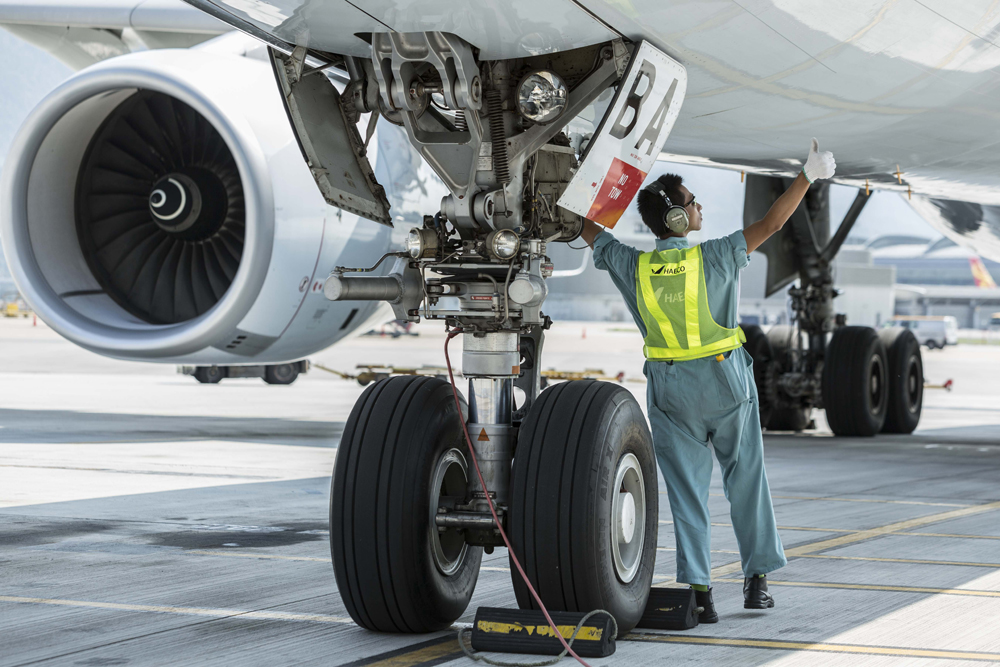
The aviation industry is beginning to soar once more. Passenger airlines carry us to ever-more far-flung destinations and cargo flights deliver our favourite products from overseas. Yet all this is only possible thanks to a crucial pillar of the industry: aircraft maintenance, repair and overhaul (“MRO”) businesses. Today, HAECO is one of the world’s leading MRO businesses and has the distinction of being the second-largest airframe MRO business globally.
The HAECO Group services global airlines, partners and original equipment manufacturers (“OEMs”) from multiple locations in Hong Kong, the Chinese Mainland, Europe and North America. And now, as the group celebrates its 75th anniversary this year, there is a renewed focus on growth to capture market opportunities as the aviation industry evolves and competition becomes fiercer.
A business primed for growth
HAECO’s businesses cover three main areas: airframe, engine and component services. It was for its engine MRO capabilities that HAECO recently received the coveted “Asia MRO of the Year – Engine” award at the MRO Asia Pacific Awards 2024. In particular, HAECO has built up a reputation for delivering best-in-class MRO services through its joint ventures with OEMs. Rather than simply taking orders from customers, HAECO acts as a strategic partner, which adds more value.
“Engines have been central to HAECO’s success over the years,” says Richard Sell, HAECO Group’s Chief Executive Officer. “We’ve demonstrated to our airline customers that, year in, year out, we can deliver high-quality products and turn engines around quickly, efficiently and in a safe way – and that is what the award recognises. It is a fantastic accolade for our joint ventures and global engine support business.”
Opportunities in Xiamen
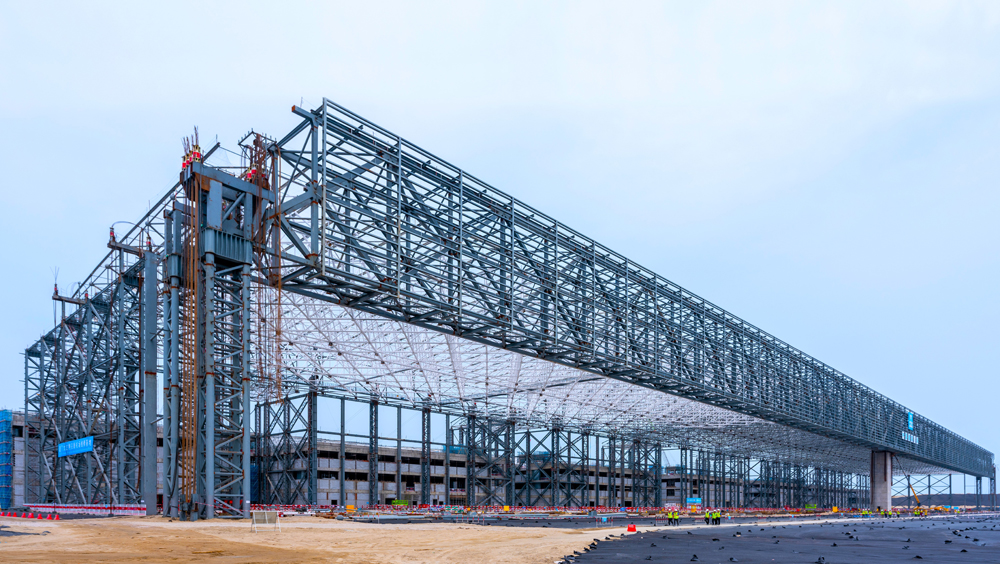
The key to creating new growth is investment. On the Chinese Mainland, at the new Xiamen Xiang’an International Airport, which will open in 2026, the group has made its single biggest investment of over RMB 4 billion in what is the world’s largest single-span hangar – scheduled for completion in November 2025.
First and foremost, this investment is a demonstration of both HAECO and Swire’s commitment to growth on the Chinese Mainland. But it also represents an opportunity to develop a world-class facility. Richard explains more: “Our current airframe business in Xiamen operates across six hangars. But with the new facility, we can fit that operating capacity all under one roof, with the opportunity to increase it over time. With everything happening under a single-span hangar, this gives us fantastic opportunities to improve efficiency and welcome new products.”
The new facility in Xiamen will also be world-leading in terms of its sustainability credentials. It is being constructed with the aim of achieving LEED-NC (“Leadership in Energy and Environmental Design for New Construction”) standards. Commitment to sustainability is something HAECO is pursuing across its businesses and it is investing accordingly.
The new facility will be used to serve new and existing customers, including Cathay Pacific, as well as other Chinese Mainland and international carriers, demonstrating HAECO’s strong global reach from its heartlands in Hong Kong and on the Chinese Mainland.
Collaborating with COMAC
While HAECO has long partnered with aerospace giants Boeing and Airbus, it has also been working with the Commercial Aircraft Corporation of China (“COMAC”), particularly supporting its C909 and C919 aircraft. In October 2024, the two organisations signed a memorandum of understanding which is intended to increase collaboration on airframe, engine and component services. This will include HAECO developing its capabilities for servicing the CF34-10A engine and C909 landing gear in the near term.
In fact, HAECO and COMAC already enjoy a strong partnership, which has been developed over several years. For example, more than 2,700 COMAC student courses have taken place at HAECO’s training facility in Xiamen. And now, as the Chinese Mainland aerospace manufacturer seeks to expand, HAECO is keen to deepen and strengthen its position as a trusted partner that can co-develop MRO solutions with COMAC.
Richard says, “As COMAC looks to grow across the region, we’re also keen to continue partnering with them to provide the MRO support they need to grow as they strengthen their global footprint.”
Developments in Dallas
In the US, HAECO has plans to provide additional capacity for its global engine support business by relocating to a new facility. The on-wing and near-wing engine segment in the US offers ample scope for growth. By investing now, the group hopes to capture more market share in the future.
Richard explains that the decision to relocate and grow its Dallas facility was driven by the anticipation of what is coming next in the industry: “MROs like HAECO always need to plan years ahead so our capabilities match airlines’ and OEMs’ latest products. We see this from our customer order books – which aircraft types and, therefore, what engine types they are adding. We want to ensure we can cater for that. So it’s about having good visibility of future volume and future products.” One example is the recent long-term partnership established with Safran Aircraft Engines to work on its LEAP Engines, which are used to power narrow-bodied aircraft. HAECO was the first supplier to install the Reverse Bleed System on these engines for Safran, and will expand the scope of its services to include the LEAP-1A and LEAP-1B engines.
Investments in technology
For HAECO, it is vital to remain at technological forefront of the competitive MRO industry. And while continuous improvement has long been a byword of its operations, it is through introducing new technology and more efficient digital tools that will help HAECO stay ahead.
There’s also a customer angle. To airlines, a shorter turnaround time (“TAT”) translates into a higher availability for flights. An aircraft parked in a hangar, and not up in the air, cannot generate revenue. In the engine sector, longer TAT means more spare engines are required for existing fleets. So, the quicker the turnaround, the better it is for the customer.
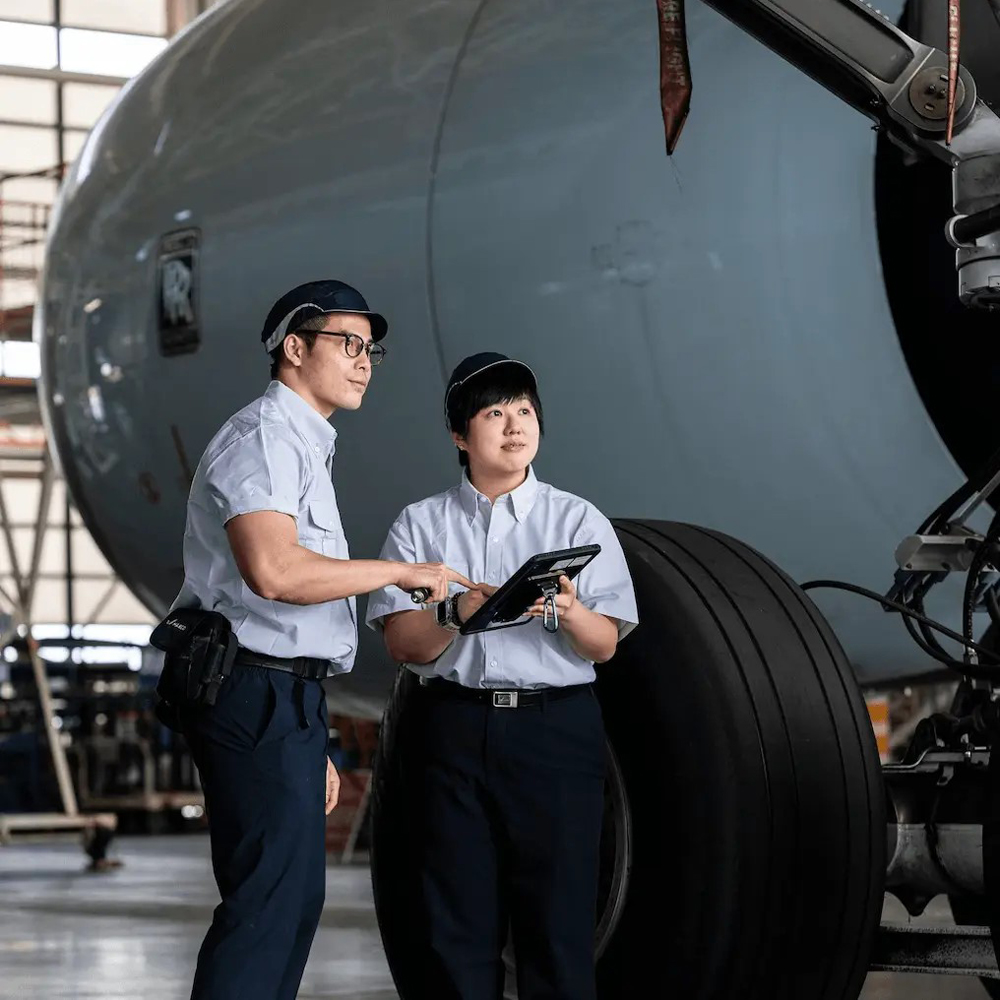
HAECO is investing in two main areas of technology to push efficiency, TAT and capability. On the hardware side, this takes the form of drone inspections and autonomous guided vehicles that assist with storage management, as well as the handling and transportation of materials. Robotic arms are also deployed to perform various repetitive tasks and improve safety. All of these save time for frontline employees so they can focus on higher-value-adding tasks and increase efficiency.
On the digital side, HAECO has implemented its Customer Gateway portal, which gives customers real-time visibility on progress. And then there’s a tool called HAECO Intelligence which gathers data for better, quicker decision-making. There have also been investments in artificial intelligence to facilitate better planning of tasks, anticipate work required and optimise where employees are to be best deployed to complete a particular task.
“We’re still in an early stage with the development of our technological and digital tools,” says Richard, “but we’re pleased with our progress which is helping position us at the forefront of our industry.”
Hong Kong is an aviation hub for the wider Greater Bay Area (“GBA”), so HAECO has been working to ensure a steady flow of talent to serve the future needs of the industry as the GBA develops. Recent initiatives include partnering with the Hong Kong Vocational Training Council, as well as Zhuhai Technician College on the Chinese Mainland.
One aspect that HAECO doubles down on is safety – not just for employees, but also for contractors and sub-contractors. “By rolling out our new cultural programme, One HAECO, we are getting across our message about safety and quality. It’s about engendering the right culture, not just in existing teams but also in all our new joiners,” explains Richard.
Exciting times ahead
There’s a lot already taking place at HAECO, but that’s only the beginning. Over the next decade, investments will continue in the base maintenance side of the business, as well as adding capacity to the engine business through opening up new shops and bringing in new products.
A final thought from Richard: “The rate at which airlines are adding to their fleets to modernise and to keep pace with demand is a wind at HAECO’s back. However, newer, more efficient aircraft and engine types will partially offset this positive impact for MROs given that they are expected to need less ongoing maintenance than legacy products.”
“What’s going to be key to our growth is securing and retaining talent and managing supply chains. There are good reasons to be confident about the future – we are absolutely in the right part of the world, in Asia Pacific, have strong customer relationships, and have shown that we can manage short-term challenges as they arise. Are we confident that the growth is there? Yes. We’re bullish on that. I believe there are exciting times ahead for HAECO.”