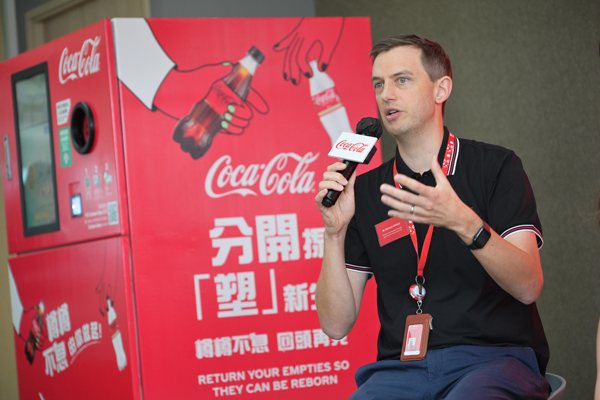
In this issue of Swire News, we examine how Swire Coca-Cola HK has introduced more recycled plastic into its beverage bottles via New Life Plastics, a recycling facility that provides food-grade recycled plastic made from bottles collected in the city. We learn about how the company has closed the 'bottle-to-bottle' loop, and explore how the new packaging helps the company reduce its reliance on virgin plastics.
On a hot day, or perhaps after exercise, there are few things more refreshing than a cold drink – especially when it's from a bottle of your favourite beverage brand. But these brands face a perennial, world-wide issue of how to deal with the waste created by plastic bottles. In Hong Kong, Swire Coca-Cola HK has devoted time and investment into finding a sustainable solution to this problem: developing a "circular economy" for plastic bottles in the city.
Pat Healy, Chair of Swire Coca-Cola, explains the impetus for the decision: "Recycling rates for plastic bottles in Hong Kong have historically been very low versus other comparable cities, with the vast majority going straight to landfill. Consumer attitudes to plastic waste are shifting rapidly around the world and so we decided a few years ago to get ahead of the issue here in Hong Kong. We wanted to seize the initiative and create our own ‘bottle-to-bottle’ solution for the city."
After speaking with key stakeholders, such as retailers, NGOs and recyclers, Swire Coca-Cola was the driving force behind the establishment of Drink Without Waste. This cross-industry initiative was set up in 2017 to boost the collection of plastic bottles across the city, and is still active today. Then, in 2019, Swire Coca-Cola decided to invest alongside two joint venture partners in its own recycling plant. Doing so ensured the company was part of the solution that addresses the waste problem caused by single-use plastics. And that's where New Life Plastics comes in.
'Closing the loop'
Packaging innovations
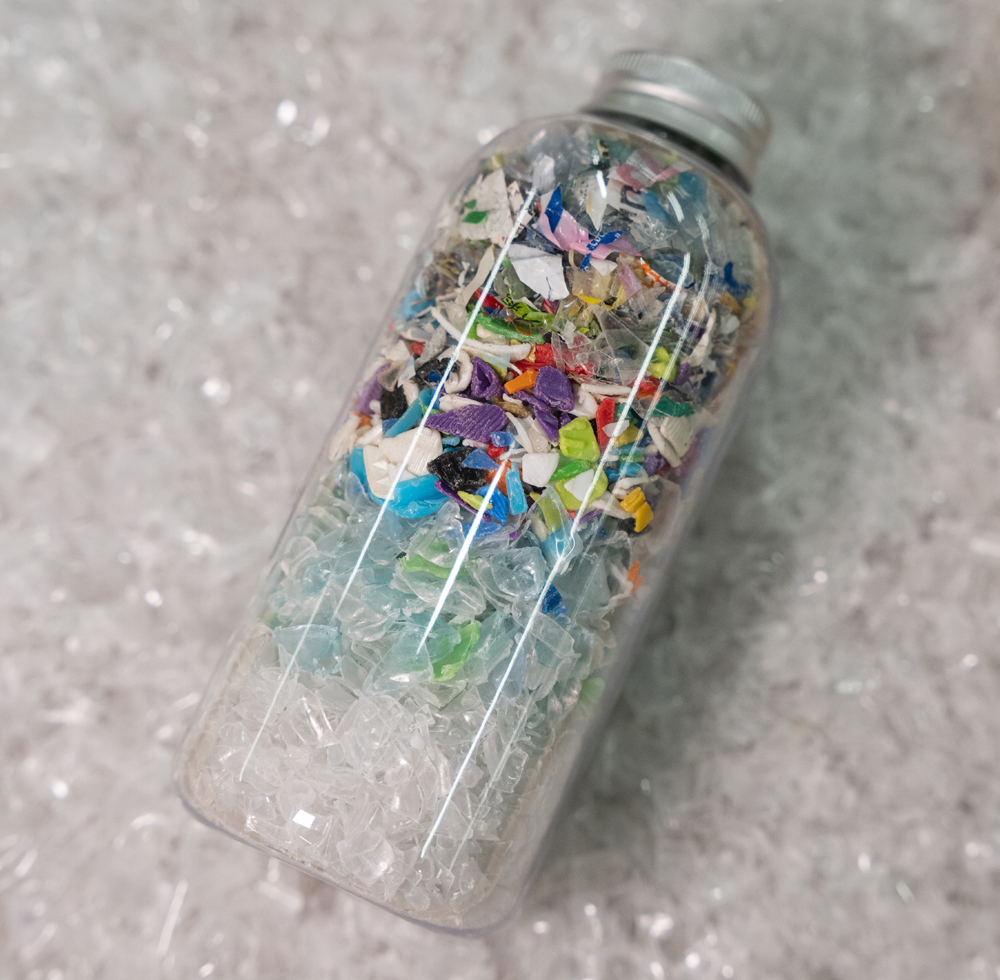
Over on the other side of Hong Kong, at Swire Coca-Cola HK's bottling plant in Sha Tin, is where the rPET flakes take on a form that consumers will instantly recognise – bottles of Coca-Cola® and other beverages. Yet, to most people, a plastic bottle just looks like a plastic bottle. However, a great deal of ingenuity has gone on behind the scenes in an effort to cut waste and reuse recycled material in the production process.
The change to using rPET began in 2019 when the material began to constitute 25% of specific bottle sizes in an effort to substitute virgin plastic during production. Fast-forward to today and all 500ml plastic bottles of Coca-Cola® Original, Coca-Cola® No Sugar and Coca-Cola® Plus are made from 100% rPET. And it isn't just the fizzy drinks that are taking on a new mantle. Mineralized water brand bonaqua® has been using 100% rPET for its 500ml and 1.5L water bottles since 2020. All of this demand for rPET is now met by New Life Plastics.
Other innovations are in place: bonaqua® Mineralized Water Label-less bottles, for example, feature etching on the bottle's surface rather than using single-use plastic labelling. And minor changes to Coca-Cola® plastic bottle necks and caps – which make them about 1.5g lighter – enable the company to save 52 tonnes of plastic each year. Indeed, Swire Coca-Cola HK was one of the pioneers in Asia to use a thinner bottle top. Crucially, these subtle changes mean that the bottles keep the fizz of their contents, remain sturdy and have absolutely no effect on the quality of the beverage inside each one.
Ready for more recycling
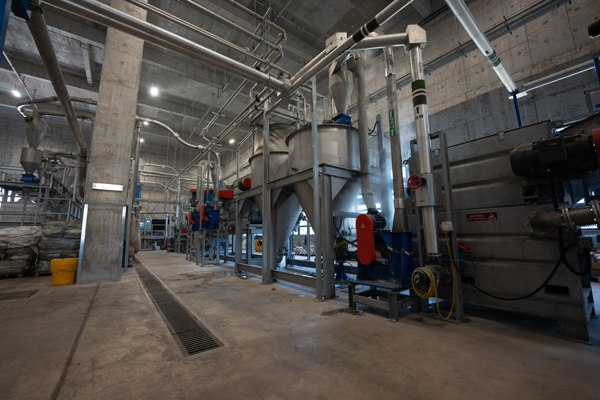
Back at New Life Plastics, the facility is seeing improvements in collection and last year it received nearly 40% more plastic than in 2024. However, the PET bottle recycling rate of just over 20% is still low by international standards and the facility has the capacity to process more than two million bottles each day, which accounts for over half the daily consumption in Hong Kong. That position is expected to improve with the Producer Responsibility Scheme on Plastic Beverage Containers and Beverage Cartons expected to be ratified by the government in the future. This key piece of legislation will set progressively higher collection obligations on beverage manufacturers with the ultimate goal of reaching a recycling rate of 75%.
Increasing the rate of recycling also needs to be supported by other initiatives, one of which is educating the general public about the benefits of recycling more. New Life Plastics has been actively working with NGOs and conducting outreach sessions to schools to explain the importance of recycling to the next generation. The facility offers guided tours, welcoming over 2,000 visitors in last two years, and collaborates with the City University of Hong Kong to take postgraduate students from the School of Energy and Environment to see, first-hand, the lifecycle of beverage bottles in Hong Kong – from collection to sorting at New Life Plastics, all the way through to production at Swire Coca-Cola HK’s plant in Sha Tin.
A final word from Pat Healy: "New Life Plastics has the capacity to cope with a much greater amount of feedstock. We will continue to work alongside the Hong Kong SAR Government and other stakeholders to drive up plastic bottle recycling rates. This will be great for New Life Plastics, great for Swire Coca-Cola and even better news for Hong Kong's environment."Did you know?
Swire Coca-Cola HK's bottles of Sprite® are no longer a distinctive green colour because coloured plastics are harder to recycle than clear plastics.
In 2022, Swire Coca-Cola HK launched an optimised returnable glass bottle (RGB) made with 60% recycled glass to boost recyclability – one-third lighter, 30% larger in volume (250ml) and transparent – aligning with its sustainability goals. Each bottle can be reused 15 to 20 times.
bonaqua® Mineralized Water, packaged in RGB form, was introduced to the hotel and business-to-business sectors in 2023.