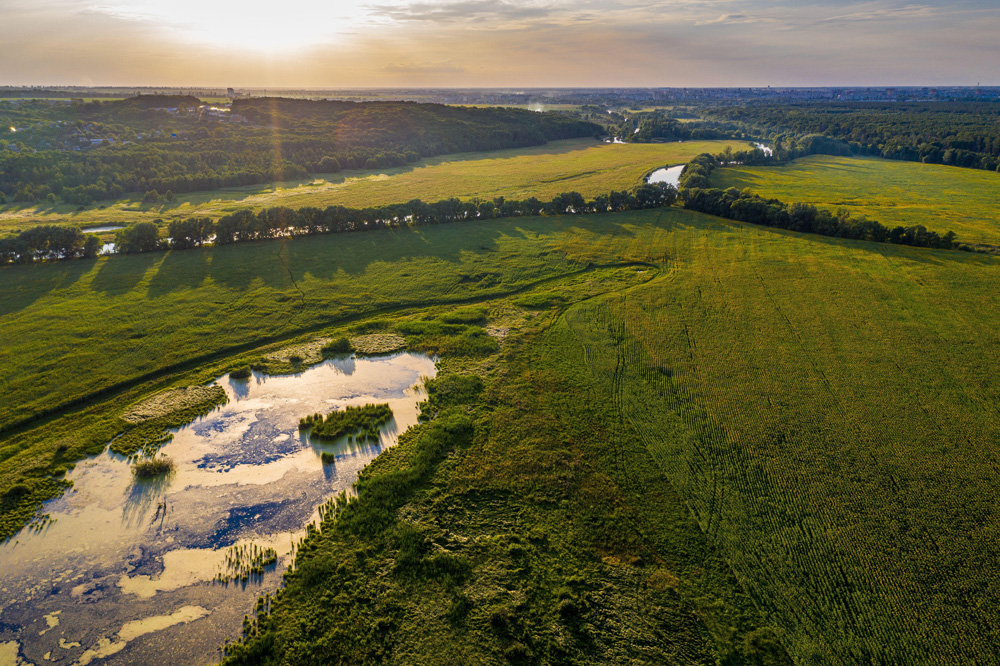
John Swire & Sons Limited is proud to expand its partnership with Restore the Earth Foundation (REF) through a nature-based carbon removal initiative in eastern Arkansas, USA. Together, they are restoring 4,500 acres of historically significant hardwood forest in the Lower Mississippi Alluvial Valley – one of North America’s most ecologically important yet degraded landscapes.
Beginning in 2027, more than 700,000 native trees will be planted across two carefully selected sites. Both properties sit within the Arkansas portion of the Lower Mississippi Alluvial Valley, an area historically covered by vast floodplain forests that were almost entirely converted to agriculture during the 20th Century. The sites were chosen because their soils and natural water patterns closely match the conditions in which these native forests once thrived, making them well-suited for successful, lasting restoration. The project will plant a diverse mix of native tree species, including several varieties of oak alongside pecan, hickory, bald cypress and other locally adapted species.
The restoration is projected to sequester approximately 350,000 metric tonnes of carbon dioxide equivalent over a 40-year period, directly supporting John Swire & Sons Limited’s long-term climate commitments. Carbon credits generated by the project will be verified to internationally recognised standards, including the Verra Verified Carbon Standard and the Climate, Community & Biodiversity Standard at Gold Level, providing a high level of assurance over both the volume and quality of climate benefits delivered. All restored acreage is protected by perpetual conservation easements, legally preventing future land-use change or commercial harvesting and ensuring that climate benefits are preserved in perpetuity.
Beyond carbon sequestration, the restoration will deliver wide-ranging ecological benefits. Bottomland hardwood forests are among the most biodiverse ecosystems in the USA, providing critical habitat for migratory waterfowl, native wildlife and a rich variety of plant species. In practical terms, healthy forests act as natural sponges and filters: tree roots absorb excess water and hold soil in place, preventing it from washing into nearby rivers, while the forest floor breaks down pollutants before they reach waterways. The re-establishment of these forests will therefore improve the quality of water flowing through the wider landscape, benefiting both wildlife and the farming communities that depend on it.